Recently in United States Supreme Court Category

February 17, 2010

United States Supreme Court Rules That Right To Public Trial In Criminal Cases Extends To Impanelment Process

In January of this year, in the case of Presley v. Georgia the United States Supreme Court ruled that included in the Sixth Amendment right to a public trial is the right to have the courtroom open during the jury selection process. Presley was tried and convicted of Cocaine Trafficking in Georgia. Before the impanelment process began an individual was observed sitting in the courtroom. The person was Presley's uncle. Over objection the trial judge excluded the defendant's uncle until after the jury had been chosen. After his conviction Presley appealed to the Georgia appellate courts. Both its Court of Appeals and its Supreme Court affirmed the verdicts. The United States Supreme Court granted certiorari and reversed the Georgia court rulings. In doing so the Supreme Court relied on the Sixth Amendment right to a public trial. Included in this right is the jury selection process. The Court in Presley recognized that in an earlier ruling under the First Amendment the public could not be excluded from the jury selection process.

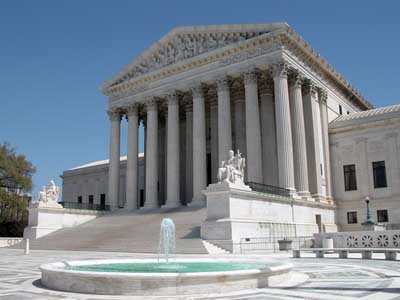
United States Supreme Court.jpg

The Massachusetts Supreme Judicial Court reaffirmed this rule in Commonwealth v. Cohen. Both the Massachusetts Supreme Judicial Court and the United States Supreme Court have suggested that there may be situtations where closure is necessary. In those instances however the trial court must find that the party looking to close the courtroom have an overriding interest that is likely to be prejudiced, the closure must be limited to that need and no more, the trial judge must consider reasonable alternatives and the trial court must make findings supporting the decision to close the courtroom.

Click here to read Presley v. Georgia.

Continue reading "United States Supreme Court Rules That Right To Public Trial In Criminal Cases Extends To Impanelment Process" »

Bookmark and Share
August 15, 2008

Supreme Court Holds That Eight Amendment Prohibits Death Penalty For Rape Of A Child

In Kennedy v. Louisiana, 128 S. Ct. 2641 (2008) the United States Supreme Court held that under the Eight Amendment to the United Stated Constitution the death penalty cannot be imposed where the crimes did not result in the death of the victim and where death was not an intended result of the crime. 

History of the case:

The defendant Patrick Kennedy was charged with the aggravated of his eight year old stepdaughter.  He was convicted.  The jury voted to sentence him to death under a Louisiana statute that permitted executions for raping a child under the age of twelve.  Kennedy appealed the conviction to the Louisiana Supreme Court.  That court affirmed the conviction.  In doing so it held in part that fourteen other states authorize the death penalty in cases other than homicide cases and that this is a trend representing a "direction of change". 

Facts:

In March of 1998 Patrick Kennedy called 911 to report that his stepdaughter had been raped.  He claimed that while in his garage getting his son ready for school two boys from his neighborhood dragged his stepdaughter into the yard, raped her and fled the scene.  The police arrived to see the victim bleeding from her vagina and wrapped in a bloody blanket.  The defendant told them that he carried her from the garage to the bathroom and started to clean her.  The victim was taken to the hospital.  Her injuries were so severe that emergency surgery was required. 

The case was tried five years later.  The victim testified against Kennedy.  There was ample corroborating evidence that he had in fact committed the crime.  His story was replete with inconsistencies.  Physical evidence at the scene and the police investigation made clear to the jury that Kennedy indeed committed this crime.  During the death penalty phase of the trial Kennedy's ex-wife's cousin testified that when she was eight years old Kennedy violated her sexually on three occasions.  The jury voted for the death penalty and the Louisiana Supreme Court affirmed. 

The Holding:

Reiterating principles set out in earlier cases the Supreme Court stated that the death penalty must be reserved and limited to those who commit the most serious crimes.  The involvement of the defendant must make him most deserving of the death penalty.  The imposition of the death penalty must be proportionate to the crime that was committed.  Where the rape of a child is committed death must result for the death penalty to be imposed.  The Louisiana statute permitting the death penalty in this case, La. Stat. Ann. sec. 14:42 was declared unconstitutional by the Supreme Court. 

The Supreme Court concluded that the death penalty must be limited to those situations where the victim was killed. 

Four Supreme Court Justices dissented in a scathing opinion written by Justice Alito. 

Massachusetts no longer has a death penalty.  It was struck down as unconstitutional in Commonwealth v. Colon-Cruz, 393 Mass. 150 (1984).  In recent years this has been the subject of great debate in Massachusetts. 

Related Web Resources:

Boston Massachusetts Criminal Defense Law Firms

Massachusetts Death Penalty Facts

Bookmark and Share
August 7, 2008

United States Supreme Court Examines "Forfeiture By Wrongdoing Doctrine" Post Crawford

In Giles v. California, slip opinion June 25, 2008 the United States Supreme Court examined at the doctrine of forfeiture by wrondoing in the context of its decision in Crawford v. Washington, 541 U.S. 36 (2004).  Giles was convicted for the 1992 shooting and killing his girlfriend.  At trial, prosecutors successfully introduced statements made by the same victim to police concerning an earlier domestic violence incident involving the defendant.  California Evidence Code section 1370 permitted such evidence in situations where 1) the declarant was unavailable, 2) the statement described the infliction or the threat of physical injury on the declarant and 3) the statement was deemed trustworthy. 

The Supreme Court acknowledged two forms of testimonial statements that were admitted at common law even though they went unconfronted.  The first involved dying declarations.  The second involved situations where a witness was kept away by the defendant to eliminate that person's testimony.  Under the latter exception courts held that a defendant should not benefit from such wrondoing and that "[t]he absence of a forfeiture rule covering this sort of conduct would create an intolerable incentive for defendants" to manipulate, bribe, itimidate, threaten or even kill witnesses against them.  The Court held that the California Evidence Code as interpreted by the California Supreme Court exceeded the context of deliberate witness tampering and in essence violated the tenets of Crawford v. Washington.  The conviction was reversed.

Massachusetts recognizes the forfeiture by wrongdoing law as well.  The seminal case is Commonwealth v. Edwards, 444 Mass. 526 (2005).  Witness tampering in Massachusetts is also a crime in and of itself.  It is defined by G.L. c. 268 sec. 13B.  A conviction of that statute carries a ten year state prison sentence. 

The intimidation of a witness in Massachusetts is viewed as a violent crime.  The penalties for a conviction of this offense are severe.  If charged with any of these acts you should contact our office and speak to one of our Massachusetts Violent Crimes Defense Lawyers now. 

Related Web Resources:

Massachusetts Violent Crimes Lawyers

Giles v. California, slip opinion june 25, 2008

Bookmark and Share
July 28, 2008

United States Supreme Court Holds That U.S. Appeals Courts Cannot Increase Sentences On Their Own Initiative

In Greenlaw v. United States ____ U.S. ____ (2008) decided on June 23, 2008, the United States Supreme Court overturned an Eighth Circuit Court of Appeals decision that increased a defendant's sentence by fifteen years. 

The defendant was charged with various drug and firearm offenses.  The government alleged that he was a member of a gang that controlled crack sales using firearms as a means of deterring competition.  The defendant went to trial and was convicted on seven of the eight counts for which he was indicted.  He appealed to the Eighth Circuit Court of Appeals on grounds that his sentence was excessive.  The government did not appeal the sentence.  Nor for that matter did it file a cross-appeal.  Rather, it simply opposed the defendant's appeal.  The Eighth Circuit Court of Appeals decided on its own volition that the sentence was too low and it increased the sentence by fifteen years.  Greenlaw petitioned for certiorari and the Supreme Court heard the case.

The United States Supreme Court held that absent a government appeal or a cross appeal a court cannot on its own initiative increase a sentence.  The Court further stated that for appellate purposes, the parties frame the issues.  The function of the courts is one of a neutral arbiter of the issues raised by the parties.  This is known as the party presentation principle.  Any departures from this procedure have been justified usually in situations where a pro se litigant is being protected.  The Supreme Court continued that the plain error rule does not apply as an override to the cross-appeal requirement.

The Law Offices of Stephen Neyman is committed to protecting the rights of the accused at all stages.  We have argued before the Massachusetts Appeals Court, the Massachusetts Supreme Judicial Court and the First Circuit Court of Appeals.  If you have been convicted of a crime you have certain appellate rights that can be exercised.  Call us now to discuss your case and potential issues.

Related Web Resources:

Massachusetts Criminal Appeals Lawyers

United States Supreme Court Opinions

Bookmark and Share